
How News Headlines Influence Bad Investment Decisions
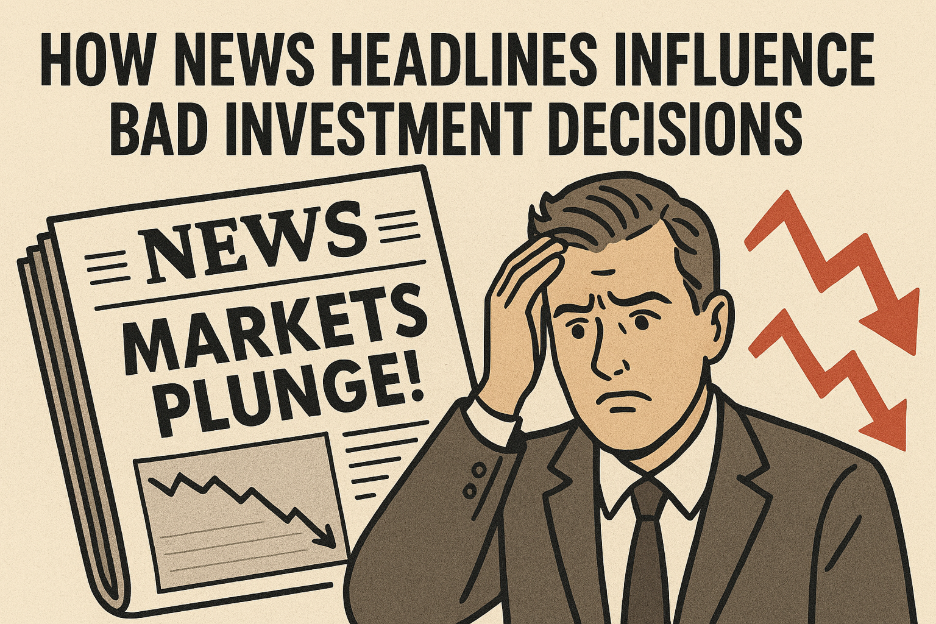
In an age where information reaches us faster than ever before, investors face a paradox. We have more data, more analysis, and more commentary than any previous generation, yet many investors continue to make poor financial decisions. Much of this has to do with the way news headlines shape our instincts. For Indian investors, who increasingly rely on digital platforms and financial media, understanding this influence is no longer optional. It is essential.
Headlines are designed to capture attention. They are meant to provoke interest, emotion, or urgency. But when it comes to investing, strong emotions rarely lead to strong results. Below is a closer look at how news headlines push investors toward poor decisions and what can be done to stay rational in an environment that rewards attention far more than accuracy.
The Psychology of Headlines
The biggest challenge begins with human psychology. Investors like to believe that they make decisions based on logic, numbers, and careful analysis. However, our brains are wired to take shortcuts. These shortcuts helped our ancestors survive danger but often work against us in financial markets.
A dramatic headline activates what psychologists call loss aversion. It is the instinctive fear of losing money, which is twice as powerful as the pleasure of making money. Another headline praising a particular stock or market sector triggers confirmation bias. It pushes us to notice information that supports our existing belief while ignoring anything that contradicts it.
In India, where financial literacy is still developing and retail participation in markets has grown rapidly, this psychological impact becomes even more visible. A sudden headline about market volatility or global uncertainties can cause thousands of new investors to panic and exit positions prematurely. The reverse is equally true. A glowing headline about an IPO or a trending sector can create fear of missing out that leads to rushed decisions.
The Sensationalism Trap
Most financial news outlets compete fiercely for attention. With digital media, this battle has intensified. Sensational headlines generate clicks. Those clicks generate revenue. While the intention might not be to mislead, the effect is often the same.
For example, a headline might state that markets have “crashed” when the reality is a correction of two or three percent. A headline might claim that a particular stock is “set to soar” even if the underlying article expresses doubt or caution. Investors who read only the headline walk away with a distorted perception.
This is where many Indian investors fall into a common trap. They trade based on headlines rather than on a full understanding of the facts. They react rapidly to surface level signals instead of patiently studying long term patterns. Over time, this behaviour erodes wealth and confidence.
Events that Trigger Irrational Reactions
News headlines tend to spike around major events. Global economic reports, political developments, corporate earnings, regulatory changes, or geopolitical tensions all become material for dramatic reporting. Each of these themes can trigger waves of irrational investor reactions.
In India, this pattern is easy to observe during Union Budget announcements, policy reforms, crude price fluctuations, or statements from global central banks. Investors who are unfamiliar with the deeper context respond impulsively. Some buy too quickly, expecting a rally. Others sell too quickly, fearing a downturn. Both groups often regret their decisions later.
Negative headlines are particularly powerful. Studies show that bad news travels faster and sticks longer in memory. This creates a cycle where investors overestimate risks and underestimate opportunities. A temporary market dip becomes a perceived long term threat. A challenging quarter becomes a reason to abandon fundamentally strong companies.
The Short Term Bias
Financial headlines almost always emphasize short term developments. Daily market movements, short term predictions, and momentary fluctuations receive far more coverage than long term trends or fundamental indicators. This creates an illusion that markets are constantly in a state of crisis or opportunity.
This short term bias encourages investors to behave like traders even if they identify as long term investors. It pushes them to act frequently, check markets constantly, and worry more than necessary. Over time, this erodes the core principle of wealth creation. Time in the market matters far more than timing the market.
Indian investors who chase news driven movements often find themselves buying high and selling low, which is the quickest path to poor performance. Long term investing requires patience, discipline, and detachment from noise, but headlines often encourage the opposite mindset.
The Role of Social Media
While traditional media has its challenges, social media introduces an entirely new layer of influence. Platforms reward engagement, not accuracy. Viral headlines, influencer opinions, and short video content tend to oversimplify complex financial topics. Even well intentioned advice often lacks nuance or context.
Retail investors in India, especially younger ones, rely heavily on social platforms for investment tips. While this has democratized market participation, it has also increased the risk of impulsive decisions. The emotional intensity of online conversations combined with attention grabbing headlines creates fertile ground for misinformation.
Social media tends to amplify fear and greed, the two emotions that lead to the majority of investment mistakes.
How to Build Immunity Against Headline Influence
The goal is not to avoid news. The goal is to filter it wisely. Investors who learn to separate noise from insight place themselves in a much stronger position.
Here are a few practical strategies:
1. Focus on long term fundamentals
Companies are not defined by one quarter of performance or a single macroeconomic event. Read annual reports, track long term trends, and understand business models.
2. Read beyond the headline
Never base a decision on a headline alone. Headlines compress information for impact, not accuracy. Understanding requires reading the full story.
3. Use news as a starting point, not a conclusion
A news item should trigger research, not action. Always verify claims with credible data before deciding.
4. Keep emotions in check
If a headline makes you feel fear or excitement, pause. Emotional reactions are warning signs that a poor decision may follow.
5. Diversify your information sources
Relying on a single platform or channel increases the risk of bias. Use multiple, reliable sources to gain a well rounded perspective.
6. Prioritize long term thinking
Short term volatility is inevitable. What matters is a stable, well thought out long term financial plan.
Conclusion
News headlines will always influence investors. They are crafted to attract attention, and our brains are programmed to react. However, successful investing requires resisting impulses and cultivating clarity. For Indian investors in particular, the growing digital ecosystem offers both opportunity and distraction. The difference lies in how we respond.
By recognizing the psychological and structural forces behind news headlines, investors can avoid the traps that lead to poor decisions. They can shift from reacting to every headline to understanding the deeper reality. Financial markets reward discipline far more than speed. The investors who stay calm, informed, and patient will always be the ones who build lasting wealth.