
Inflation-Proof Investments: Where to Put Your Money?
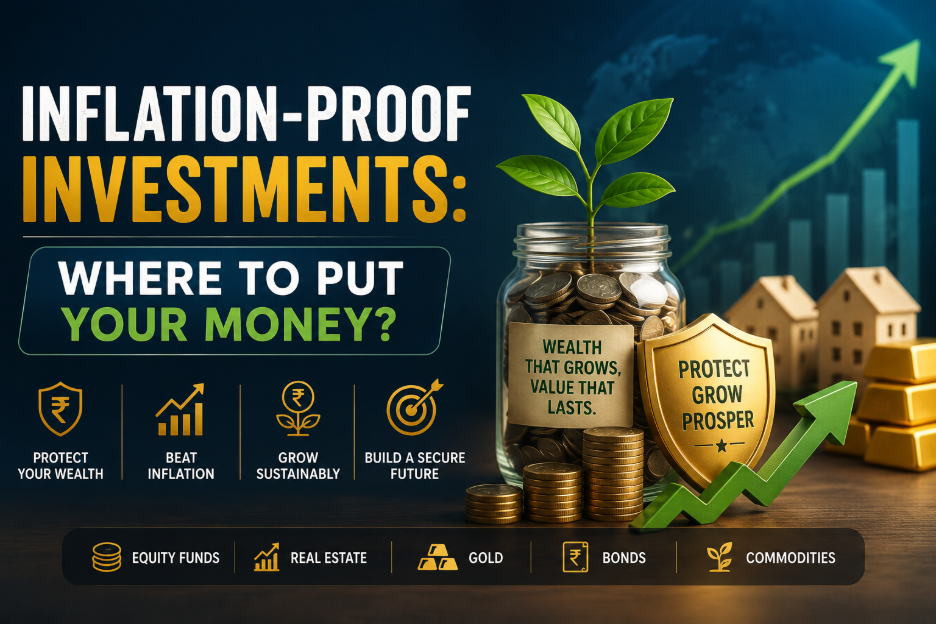
Inflation is often called the “silent wealth destroyer.” It erodes purchasing power, making every dollar—or rupee—worth less over time. While moderate inflation is a sign of a healthy economy, persistent or high inflation can significantly impact savings and investments. In 2025, inflation remains above central banks’ targets globally, and investors are increasingly seeking strategies to protect their wealth. This article explores inflation-proof investments, why they matter, and where you can put your money to safeguard your financial future.
Why Inflation Matters for Investors
Inflation refers to the rise in prices of goods and services over time. When inflation is high, the real return on investments—returns adjusted for inflation—can turn negative. For example, if your fixed deposit earns 5% annually but inflation is 6%, your purchasing power is shrinking despite nominal gains.
Traditional savings accounts and fixed-income instruments often fail to keep pace with inflation. This makes inflation-proof investments essential for preserving wealth and achieving long-term financial goals.
Characteristics of Inflation-Proof Investments
Inflation-resistant assets share certain traits:
- Intrinsic Value: Assets like gold or real estate hold inherent worth.
- Pricing Power: Businesses that can pass rising costs to consumers maintain profitability.
- Inflation-Linked Returns: Instruments like Treasury Inflation-Protected Securities (TIPS) or I Bonds adjust payouts based on inflation.
- Scarcity or Limited Supply: Commodities and precious metals often appreciate when currency weakens.
Top Inflation-Proof Investment Options for 2025
1. Treasury Inflation-Protected Securities (TIPS) and I Bonds
Government-backed securities remain one of the safest hedges against inflation.
- TIPS: These U.S. Treasury bonds adjust their principal value based on the Consumer Price Index (CPI). Interest payments rise with inflation, ensuring purchasing power is preserved.
- I Bonds: Series I Savings Bonds combine a fixed rate with an inflation-adjusted component, recalculated every six months. Current composite yields hover around 3–4%, making them attractive for conservative investors.
Pros: Virtually risk-free, backed by the government.
Cons: Purchase limits and liquidity constraints (I Bonds require a minimum holding period of 12 months).
2. Real Estate and REITs
Real estate has historically been a strong inflation hedge. Property values and rental income tend to rise with inflation, offering both appreciation and cash flow.
- Direct Ownership: Buying residential or commercial property can provide long-term gains, though it requires significant capital and management.
- REITs (Real Estate Investment Trusts): For those seeking liquidity and diversification, REITs offer exposure to income-generating properties without direct ownership hassles. By law, REITs distribute at least 90% of taxable income as dividends, making them attractive for income-seekers.
Pros: Tangible asset, potential for rental income.
Cons: Market cycles and interest rate sensitivity.
3. Commodities
Commodities like oil, agricultural products, and metals often surge during inflationary periods.
- Gold and Precious Metals: Gold remains the classic inflation hedge, retaining value when fiat currencies weaken. Silver and platinum are also gaining traction.
- Commodity ETFs: For easier access, investors can opt for ETFs tracking commodity indices.
Pros: Historically strong performance during inflation spikes.
Cons: Volatile and influenced by global supply-demand dynamics.
4. Dividend-Paying Stocks
Equities in sectors with pricing power—such as consumer staples, utilities, and healthcare—tend to perform well during inflation. Companies that consistently raise dividends signal financial strength and resilience.
- Why Dividends Matter: Dividend growth often outpaces inflation, providing a steady income stream.
- Sectors to Watch: FMCG, energy, and infrastructure companies are prime candidates.
Pros: Potential for capital appreciation and income.
Cons: Market volatility and sector-specific risks.
5. Infrastructure Investments
Infrastructure assets—such as toll roads, utilities, and energy pipelines—often have inflation-linked revenue models. Many contracts include clauses that adjust payments based on CPI, making them reliable inflation hedges.
Pros: Stable cash flows, essential services.
Cons: Regulatory and political risks.
6. Alternative Assets: Gold IRAs and Crypto
- Gold IRAs: Holding physical gold in a tax-advantaged retirement account combines long-term investment benefits with inflation protection.
- Cryptocurrency: Some investors view crypto as a hedge due to its limited supply. However, volatility and regulatory uncertainty make it a high-risk option.
Pros: Diversification and potential upside.
Cons: High volatility and lack of intrinsic value (crypto).
Key Strategies for Inflation-Proof Investing
- Diversify Across Asset Classes
Don’t rely on a single hedge. Combine TIPS, real estate, commodities, and equities for balanced protection.
- Focus on Quality and Liquidity
Inflationary periods can trigger market volatility. Prioritize assets that are easy to liquidate if needed.
- Avoid Long-Term Fixed-Rate Debt
Rising inflation erodes the value of fixed interest payments. Floating-rate instruments may be better.
- Review and Rebalance Regularly
Inflation trends can shift quickly. Monitor your portfolio and adjust allocations as needed.
Final Thoughts
Inflation is inevitable, but its impact on your wealth doesn’t have to be. By strategically allocating funds to inflation-proof investments—such as TIPS, real estate, commodities, and dividend-paying stocks—you can preserve purchasing power and maintain financial stability. Remember, no investment is entirely risk-free. Conduct thorough research, consider your risk tolerance, and consult a financial advisor before making major decisions.