
Behavioral Finance: How Emotions Impact Your Investment Decisions
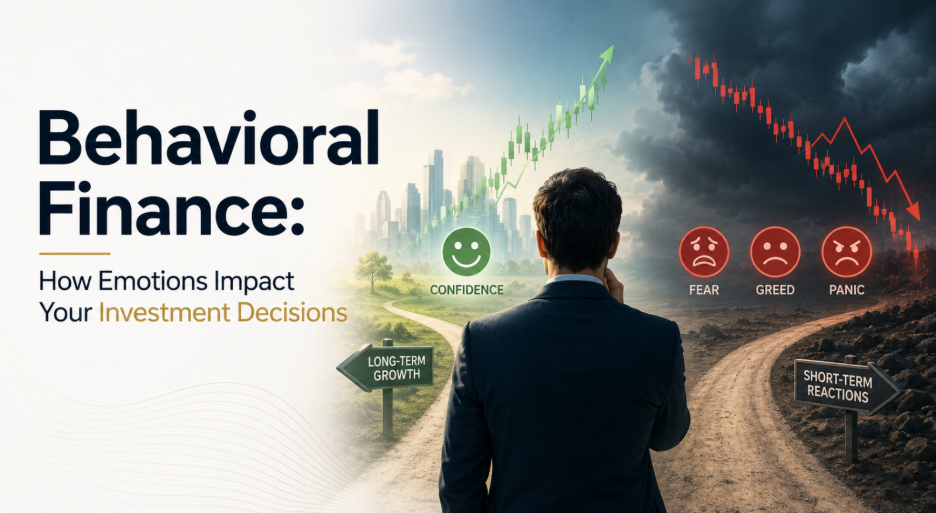
In the world of investing, numbers and data often take center stage. Investors spend hours analyzing charts, evaluating company fundamentals, and studying market trends. Yet even the most sophisticated financial models can be overshadowed by something much more human. Our emotions. Behavioral finance, a field that blends psychology with economics, shows that investment decisions are rarely as rational as we would like to believe. Whether you are a seasoned investor or just beginning your financial journey, understanding how emotions shape your decisions is one of the most valuable skills you can develop.
Why Behavioral Finance Matters
Traditional financial theory assumes that investors make rational choices, optimize their portfolios, and always act in their best financial interest. Real life tells a different story. Investors buy high when excitement fills the market and sell low when fear takes over. They cling to losing stocks out of hope or pride and jump into trends because everyone else appears to be making money.
Behavioral finance acknowledges that humans are not perfectly rational. It studies the emotional, cognitive, and social influences that lead to biased financial decisions. By understanding these influences, individuals can improve their judgment and avoid costly mistakes.
Common Emotional Biases That Affect Investors
1. Overconfidence Bias
Overconfidence bias leads investors to believe they know more than they actually do. This often results in taking excessive risks, underestimating potential losses, or trading too frequently. Overconfident investors trust their instincts over market realities and may misjudge the probability of negative outcomes.
A classic example is the tendency of some investors to believe they can consistently outperform the market. In reality, even professional fund managers struggle to do so. Overconfidence encourages investors to rely more on subjective judgment than objective analysis, which increases the likelihood of errors.
2. Herd Behavior
Humans are social by nature and have an innate tendency to follow the crowd. Herd behavior occurs when investors make decisions because others are doing the same, rather than relying on their own research. This behavior amplifies market bubbles and deepens market crashes.
When a particular stock or asset class begins to rise rapidly, social pressure and fear of missing out make it difficult for investors to stay disciplined. The dot‑com bubble and the rapid rise and fall of various cryptocurrencies provide clear examples of herd mentality at work.
3. Loss Aversion
Losses often feel far more painful than equivalent gains feel rewarding. This is known as loss aversion. It can cause investors to avoid even reasonable risks or to hold on to losing investments far longer than they should.
Investors sometimes refuse to sell poorly performing stocks because doing so would force them to acknowledge a loss. Rather than making a rational decision based on updated information, they hope the stock will bounce back. Unfortunately, this hope can lead to deeper losses.
4. Anchoring Bias
Anchoring occurs when investors rely too heavily on the first piece of information they encounter. This could be a stock’s previous high price, an analyst’s prediction, or even a rumor. Once anchored, investors find it difficult to adjust their thinking even when new information becomes available.
For example, someone who bought a stock at a high price may anchor to that price and refuse to sell until it returns to that level, regardless of fundamental changes in the company.
5. Emotional Overreaction
Markets often swing dramatically due to emotional reactions rather than fundamental changes. Fear can lead to panic selling during downturns, while excitement can lead to irrational buying during rallies.
These emotional swings are intensified by news cycles and social media, which often highlight extreme opinions or dramatic forecasts. As a result, investors react quickly and emotionally instead of taking a measured approach.
How Emotions Influence Market Trends
When individual biases combine, they influence overall market behavior. Fear and greed are often described as the two primary forces that drive market cycles. During bull markets, greed fuels optimism and drives prices higher. During bear markets, fear leads to pessimism and drives prices lower.
Behavioral patterns are visible in phenomena such as momentum trading, bubbles, corrections, and crashes. By understanding these patterns, investors can better interpret market movements and avoid being swept up in emotionally charged decisions.
Practical Strategies to Manage Emotional Biases
Fortunately, emotional biases do not have to control your investment decisions. With awareness and discipline, you can limit their impact.
1. Create a Well Defined Investment Plan
A written financial plan makes it easier to stay disciplined. Define your goals, risk tolerance, time horizon, and asset allocation. When emotions arise, refer back to this plan instead of reacting impulsively to market fluctuations.
2. Diversify Your Portfolio
Diversification reduces emotional stress by spreading risk across different asset classes. This prevents any single investment from dominating your portfolio and helps smooth out volatility.
3. Automate Your Investments
Automated contributions to investment accounts reduce the temptation to time the market. Automation fosters consistency, which is one of the strongest predictors of long term success.
4. Limit Frequent Checking of Your Portfolio
Constant monitoring increases anxiety and amplifies emotional reactions. Checking your portfolio weekly or monthly, instead of daily, helps maintain a long term perspective.
5. Seek Professional Guidance
A financial advisor provides objective insights and helps counter emotional biases. They can act as a buffer during periods of market uncertainty and help keep your decisions aligned with your plan.
The Path to Better Investment Decisions
Behavioral finance reminds us that investing is not just a numbers game. It is a psychological experience shaped by emotions, biases, and social influences. By understanding how emotions impact decision making, investors can become more self aware and more strategic.
Improving your investment outcomes begins with recognizing your own biases. The more you understand your emotional tendencies, the better equipped you will be to make rational, informed, and confident decisions. Over time, this awareness can significantly enhance your financial resilience and long term success.