
CIBIL Score: How to Build and Repair It
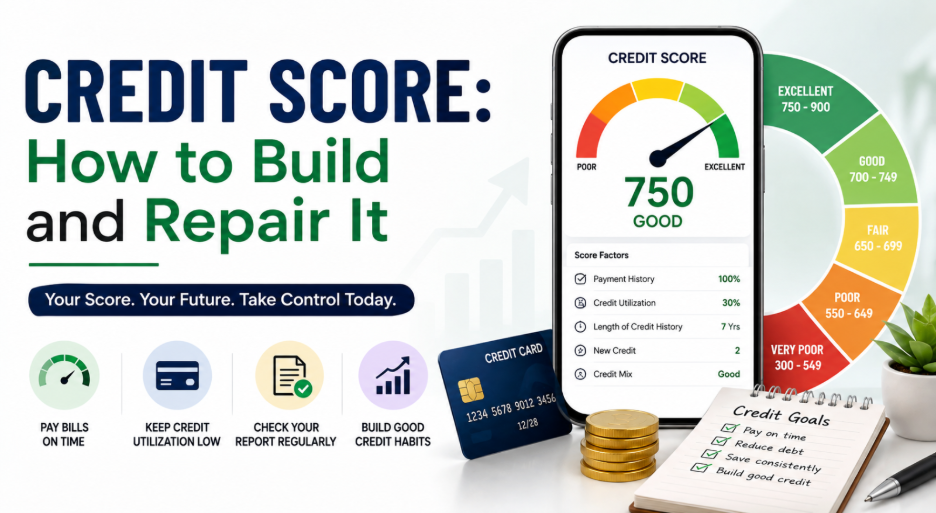
Your CIBIL score is not just a number sitting quietly in some bank’s database. It is your financial reputation. It decides whether your home loan gets approved, what interest rate you end up paying, and sometimes even whether a landlord trusts you enough to hand over the keys to a flat.
If you have ever typed “how to improve CIBIL score” into Google at midnight after a loan rejection, this one is for you.
What Exactly Is a CIBIL Score?
Think of your CIBIL score as a report card for how you handle money you have borrowed. In India, this score is issued by TransUnion CIBIL, and it ranges from 300 to 900. Here is what the range generally means:
- 300-549: Poor
- 550-649: Fair
- 650-749: Good
- 750-900: Excellent
Most banks and NBFCs in India look for a score of 750 or above before they roll out their best interest rates. Anything below 650 usually means higher interest, stricter conditions, or a straight rejection.
One thing worth knowing: if you have never taken a loan or used a credit card, your report may show NA or NH, meaning no credit history. That is not a bad score, it simply means the bureau has nothing to judge you on yet.
What Affects Your CIBIL Score?
Your score is not random. It is built on a handful of factors, and knowing the weightage helps you know where to focus your energy.
1. Payment History (around 35% weightage) This is the single biggest factor. A late EMI or a missed credit card payment can sit on your report and drag your score down for years. Even one skipped payment, reported to the bureau, is enough to make lenders nervous.
2. Credit Utilisation Ratio (around 30% weightage) This is how much of your total available credit limit you are actually using. If your credit card limit is one lakh rupees and you are regularly running a balance of eighty thousand, that is a red flag to lenders. Try to stay under 30% of your limit, and if you can manage 10%, even better.
3. Length of Credit History (around 15% weightage) The longer your credit accounts have been active, the more data lenders have to trust you with. This is why closing your oldest credit card, even if you rarely use it, can sometimes hurt more than help.
4. Credit Mix (around 10% weightage) A healthy combination of secured loans (like a home loan or car loan) and unsecured credit (like a credit card or personal loan) shows lenders you can handle different kinds of debt responsibly.
5. New Credit Enquiries (around 10% weightage) Every time you apply for a loan or credit card, the lender raises a hard enquiry with the bureau. Too many enquiries in a short span makes you look credit hungry, and that pulls your score down.
How to Build a CIBIL Score From Scratch
If you are just starting out, maybe you are a student, a fresher at your first job, or someone who has always paid in cash, here is what actually works in India.
Get a Secured Credit Card Many Indian banks offer credit cards against a fixed deposit. You keep the FD, the bank gives you a card with a limit tied to that deposit, and your payment behaviour gets reported to CIBIL. Pay on time and your score starts moving.
Become an Add-on Cardholder Ask a parent, spouse, or sibling with a healthy credit history to add you as an add-on or supplementary cardholder on their credit card. Their responsible repayment habits can help build your own file over time, though the impact varies by bureau and card issuer.
Take a Small Personal or Gold Loan A small loan, even a gold loan against family jewellery, that you repay in EMIs on time, is one of the fastest ways to start a credit file in India.
Use a Credit Builder Loan or Consumer Durable Loan Buying a phone or an appliance on EMI through an NBFC and repaying it on schedule also gets reported and adds to your history.
How to Repair a Damaged CIBIL Score
If your score has already taken a hit, do not panic. Here is a realistic plan.
Pay Every Bill on Time, Without Exception Set up auto debit for your credit card and loan EMIs. Consistency here matters more than any other single step you can take.
Bring Down Your Credit Utilisation Pay down existing balances, or request your bank for a credit limit increase so your utilisation ratio automatically drops. Avoid maxing out your cards even during festive sale season.
Check Your Credit Report for Errors You are entitled to one free credit report every year from CIBIL, and similar access from Experian, Equifax, and CRIF Highmark. Go through it carefully. Wrong account details, loans that are not yours, or accounts wrongly marked as overdue are more common than people expect. Raise a dispute with the bureau if you spot any mistake.
Avoid Applying for New Credit Right Now Every hard enquiry chips away at your score a little. If you are trying to recover, resist the urge to apply for three credit cards at once.
Negotiate a Settlement on Old Dues If you have an account gone into default or written off, reach out to the lender directly. Many banks in India are open to a one time settlement, and in some cases a written closure letter, which at least stops the damage from growing.
A Realistic Example
Say your CIBIL score is sitting at 580, and you are using 75% of your credit card limit every month. If you bring that utilisation down below 30% and keep every payment on time for six months straight, it is realistic to see your score climb to 670 or higher, moving you from the Fair category into Good. On a home loan of fifty lakh rupees, that kind of improvement can mean a lower interest rate that saves you several lakhs over the loan tenure.
Bottom Line
Building or repairing your CIBIL score is not about hacks or shortcuts. It comes down to boring, repeatable habits: pay on time, keep your utilisation low, and check your report every few months. Do this consistently and doors open, better loan terms, faster approvals, and one less thing to worry about when you need money in a hurry.
Quick Action Steps
- Pull your free credit report today from CIBIL, Experian, Equifax, or CRIF Highmark.
- Set up auto debit for every EMI and credit card bill.
- Keep your credit utilisation under 30%.
- Dispute any errors you find on your report immediately.
- Hold off on new credit applications until your score recovers.