
Common Money Mistakes to Avoid in Your 30s (And How to Fix Them)
Key Takeaways
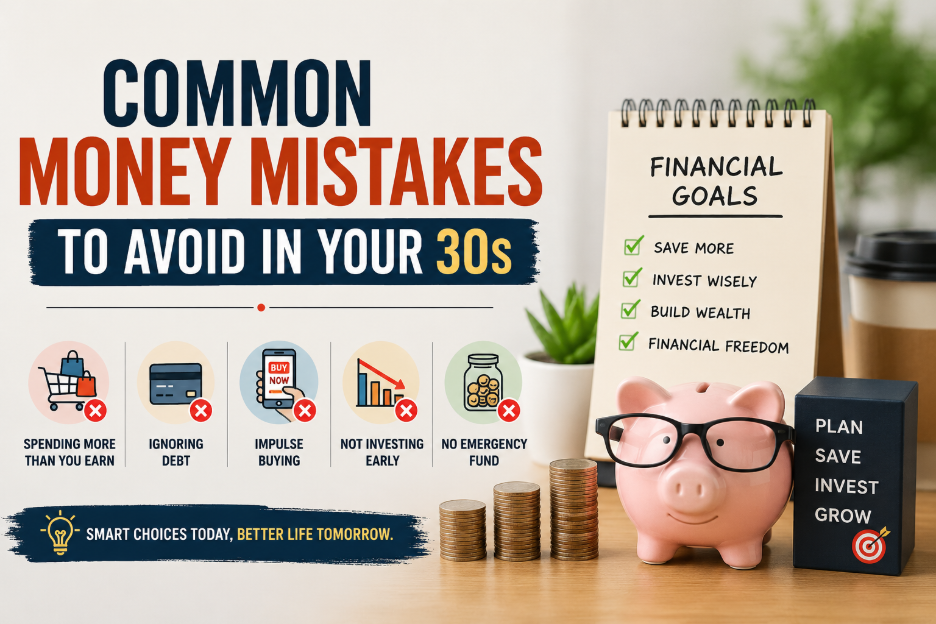
- The most common money mistakes in your 30s are skipping an emergency fund, delaying retirement savings, lifestyle inflation, being underinsured, mismanaging debt, having no clear financial goals, and neglecting career growth.
- Three to six months of living expenses in an emergency fund is the standard guideline for financial stability in your 30s.
- Starting retirement savings in your 30s, even with small amounts, beats saving larger amounts later, because of compounding.
- High-interest debt should usually be paid down before extra investing, while low-interest debt like a mortgage can be managed alongside regular contributions.
Your 30s are widely considered the most financially defining decade of adult life. It is the decade of career growth, marriage, home buying, raising children, and sometimes starting a business. These milestones create real opportunity, but they also open the door to financial mistakes that quietly limit your options for decades if they go unchecked.
The good news: avoiding these money mistakes in your 30s does not require financial expertise. It requires awareness of the most common pitfalls and consistent action to correct course. Below are the seven financial mistakes people in their 30s make most often, along with practical steps to avoid each one.
Table of Contents
- Not Building an Emergency Fund
- Delaying Retirement Savings and Long-Term Investing
- Overspending Through Lifestyle Inflation
- Carrying Insufficient Insurance Coverage
- Mismanaging High-Interest Debt
- Not Setting Clear Financial Goals
- Neglecting Career Growth and Upskilling
1. Not Building an Emergency Fund
One of the most common money mistakes in your 30s is failing to build a real emergency fund. Life is unpredictable. Job loss, medical emergencies, sudden home repairs, or family needs can appear without warning. Without a financial cushion, people often fall into debt or make rushed financial decisions that damage long-term goals.
Financial experts typically recommend keeping three to six months of essential living expenses in a liquid, easily accessible savings account. If you are a single-income household, work in a less stable industry, or support dependents, aim for the higher end of that range.
An emergency fund does not need to be built overnight. It grows through consistent contributions, even small ones. A simple automatic transfer set up each payday can make building an emergency fund almost effortless.
2. Delaying Retirement Savings and Long-Term Investing
Your 30s are the ideal decade to accelerate retirement savings and long-term investing, since you still have time on your side for compounding to work. Unfortunately, many people delay retirement contributions because of competing financial priorities, lifestyle spending, or the belief that they can catch up later. Catching up is possible, but it becomes harder with every passing year.
Even modest retirement contributions in your 30s can grow substantially by the time you retire. Saving a consistent amount every month for thirty years typically produces better long-term results than saving larger amounts for only the final ten or fifteen years. Prioritize retirement accounts such as an employer-sponsored 401(k), an EPF, or an IRA, and increase your contribution rate whenever your income rises.
Diversification also matters for long-term investing. Relying only on fixed income, or only on aggressive equities, both carry risk. A balanced investment portfolio suited to your personal risk tolerance and financial goals is generally the more reliable long-term approach.
3. Overspending Through Lifestyle Inflation
There is a natural pull toward upgrading your lifestyle as income rises in your 30s. Nicer cars, bigger homes, premium gadgets, frequent vacations, and dining out can all feel like earned rewards. The financial mistake begins when lifestyle spending grows faster than your actual financial capacity.
This pattern, often called lifestyle inflation, quietly erodes your ability to save. What feels like a small, harmless monthly expense can add up into a significant loss of long-term investment growth. Before any lifestyle upgrade, it is worth asking whether the purchase supports your long-term financial goals or simply satisfies short-term excitement.
Keeping lifestyle spending sustainable while increasing your savings and investment contributions is one of the most effective financial habits you can build in your 30s.
4. Carrying Insufficient Insurance Coverage
Many people in their 30s underestimate how much insurance coverage they actually need. As financial responsibilities grow, so does the cost of being underinsured. Life insurance, health insurance, disability coverage, and home or auto insurance can each prevent a single event from becoming a financial crisis.
Life insurance becomes especially important in this decade, particularly for anyone with dependents. Starting earlier is generally better, since premiums tend to be lower while you are younger and healthier.
Health insurance should never be treated as optional. A single medical emergency without adequate coverage can cost months or years of savings. Review your insurance policies regularly to confirm they still match your current lifestyle and family situation.
5. Mismanaging High-Interest Debt
Debt in your 30s commonly comes from student loans, credit cards, personal loans, mortgages, or car loans. Not all debt carries equal risk. A mortgage is generally considered productive debt, since it builds equity over time. High-interest credit card debt is far more damaging if it is not addressed early, making it one of the more costly money mistakes to avoid in your 30s.
Ignoring or delaying repayment of high-interest debt usually leads to higher long-term interest costs and ongoing financial stress. A structured repayment plan that targets the highest-interest debt first tends to work better than an unplanned, month-to-month approach. This might include consolidating loans, negotiating better interest rates, or adjusting spending habits.
A sound financial plan does not require eliminating every debt immediately. It requires managing debt strategically so it does not limit your future financial choices.
6. Not Setting Clear Financial Goals
Your 30s are a decade when personal and financial priorities become clearer, yet many people continue managing money without defined short-term or long-term financial goals. Without clear direction, savings and investment decisions tend to become inconsistent and unfocused, one of the quieter but more common financial mistakes people make.
Setting specific goals, such as buying a home, building an education fund, starting a business, traveling, or reaching early retirement, allows for more effective financial planning. Clear financial goals guide exactly where your money should go and how aggressively you need to save or invest to get there.
Review your financial goals at least once a year, adjust them as circumstances change, and track your progress along the way.
7. Neglecting Career Growth and Upskilling
This may not sound like a traditional financial mistake, but your career remains the primary engine behind your income. In your 30s, continued learning, upskilling, and staying relevant in your industry directly affect your long-term financial outcomes. People who stop investing in their own professional development often experience slower income growth over time.
Ongoing professional development can lead to promotions, new opportunities, or a successful career change if needed. Certifications, online courses, and industry training are worth treating as long-term financial investments, not just career extras.
Frequently Asked Questions
What is the biggest money mistake people make in their 30s? Financial planners most often point to not having an emergency fund, since this gap forces people into high-interest debt the moment an unexpected expense appears.
How much should I have in savings by age 30? There is no single number that fits everyone, but a common guideline is three to six months of essential living expenses in an accessible savings account, in addition to any retirement contributions.
Is it too late to start investing in your 30s? No. Your 30s still leave roughly two to three decades of compounding before typical retirement age, which is enough time to build meaningful long-term savings through consistent contributions.
Should I pay off debt or invest first? As a general rule, high-interest debt such as credit card balances should be paid down first, since the interest rate usually outpaces typical investment returns. Lower-interest debt, such as a mortgage, can often be managed alongside regular investing.
How do I stop lifestyle inflation? Direct a fixed percentage of every raise or bonus straight into savings or investments before adjusting your monthly spending, so your lifestyle grows more slowly than your income.
Final Thoughts
Your 30s are a genuinely opportunity-rich decade, and the financial decisions you make now will shape your 40s, 50s, and beyond. Avoiding these common money mistakes, building an emergency fund, prioritizing retirement savings, controlling lifestyle inflation, securing proper insurance, managing debt strategically, setting clear financial goals, and investing in career growth, can put you significantly ahead of the curve.
Start small, stay consistent, and keep learning. Your future self will thank you for the financial discipline and clarity you built today.