
Introduction: The Silent Wealth Builder
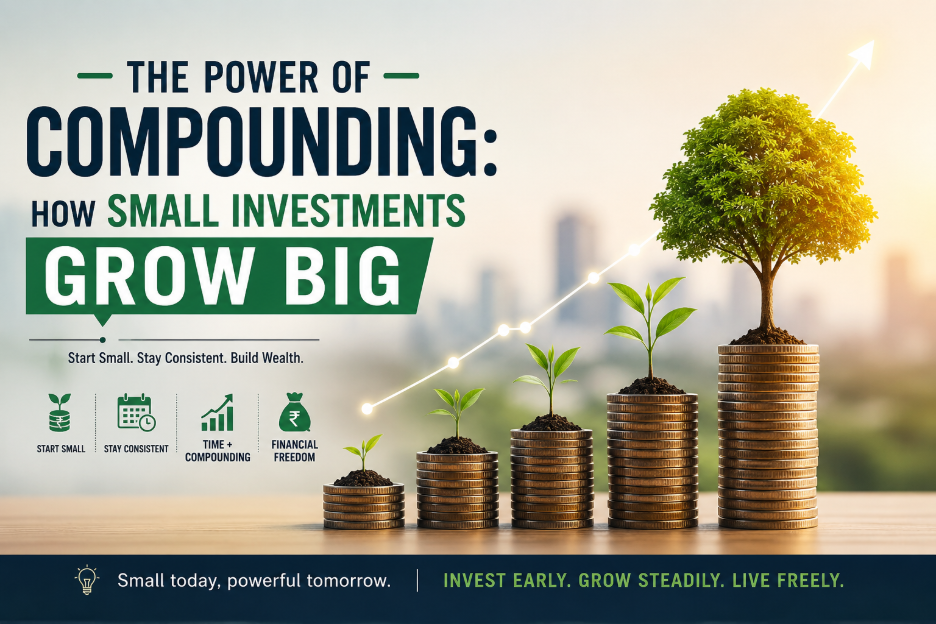
Albert Einstein famously called compound interest the “eighth wonder of the world.” And for good reason—compounding is the quiet force that transforms modest savings into substantial wealth over time. Whether you’re planning for retirement, building an emergency fund, or investing for long-term goals, understanding the power of compounding can be the difference between financial struggle and financial freedom.
In this article, we’ll explore:
- What compounding is and why it matters
- How small investments grow exponentially
- Real-world examples and data
- Strategies to maximize compounding
- Common mistakes to avoid
What is Compounding?
Compounding occurs when your investment earns returns, and those returns themselves start earning returns. In simple terms, it’s “interest on interest.” Unlike simple interest, which is calculated only on the principal, compound interest grows your wealth exponentially because each period’s earnings are reinvested.
Formula for Compound Interest:
A = P \times (1 + r)^n
Where:
- A = Future Value
- P = Principal (initial investment)
- r = Annual interest rate
- n = Number of years
Why Compounding is So Powerful
The magic of compounding lies in time. The longer your money stays invested, the greater the effect. Even small contributions can snowball into significant sums if given enough time.
The Rule of 72
A quick way to estimate how long it takes for your money to double:
Years to Double} = 72/Interest Rate
For example:
- At 6% annual return → 72 ÷ 6 = 12 years to double.
- At 12% annual return → 72 ÷ 12 = 6 years to double.
Real-World Examples of Compounding
Example 1: Starting Early vs. Starting Late
- Investor A starts at age 25, investing ₹10,000 annually at 8% return.
- Investor B starts at age 35, investing the same amount at the same rate.
By age 65:
- Investor A: ₹50.3 lakh
- Investor B: ₹23.3 lakh
That 10-year head start nearly doubles the wealth—without investing more money.
Example 2: Small Daily Investments
Recent data shows that investing ₹150 per day (₹4,500/month) in a mutual fund SIP with an average return of 12% can build a corpus of ₹1 crore in 25 years. Even at a conservative 8% return, you’d accumulate over ₹50 lakh.
Benefits of Compounding
- Accelerated Growth
Your money grows faster over time because returns generate additional returns.
- Financial Discipline
Regular investments (like SIPs) encourage consistency and long-term thinking.
- Wealth Creation Without Stress
You don’t need huge sums—just patience and persistence.
- Works Across Asset Classes
Stocks, bonds, mutual funds, and even fixed deposits benefit from compounding.
Strategies to Maximize Compounding
1. Start Early
Time is your greatest ally. Even small amounts invested early outperform large sums invested later.
2. Stay Invested
Avoid withdrawing earnings. Interrupting compounding reduces its impact dramatically.
3. Automate Investments
Set up systematic investment plans (SIPs) or auto-debits to ensure consistency.
4. Reinvest Dividends
Instead of cashing out dividends, reinvest them to accelerate growth.
5. Use Tax-Advantaged Accounts
Instruments like PPF, EPF, and ELSS in India offer tax benefits and compounding growth.
Common Mistakes to Avoid
- Starting Late: Every year you delay costs you potential wealth.
- Chasing High Returns: Focus on consistency, not speculation.
- Ignoring Inflation: Ensure your returns outpace inflation.
- Breaking Investments Early: Premature withdrawals kill compounding.
Conclusion: The Time-Tested Wealth Formula
Compounding is not a get-rich-quick scheme—it’s a get-rich-sure strategy. The earlier you start and the longer you stay invested, the more powerful this force becomes. Whether you invest ₹100 a day or ₹10,000 a month, the principle remains the same: patience + consistency + time = wealth.
Start today. Your future self will thank you.