
The 50-30-20 Rule in Finance: Does It Really Work?
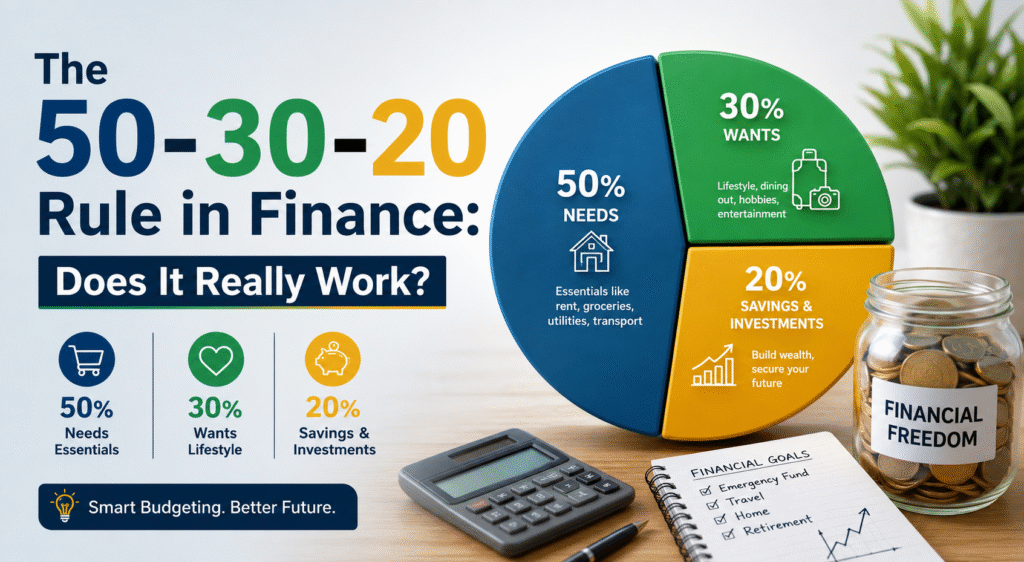
Managing personal finances can feel overwhelming, especially when juggling multiple expenses and long-term goals. To simplify budgeting, many financial experts recommend the 50-30-20 rule, a widely discussed framework for allocating income. But does this rule truly work for everyone? Let’s explore its origins, mechanics, benefits, limitations, and whether it fits modern financial realities.
What Is the 50-30-20 Rule?
The 50-30-20 rule is a budgeting guideline that divides your after-tax income into three categories:
- 50% for Needs: Essential expenses such as housing, utilities, groceries, transportation, insurance, and minimum debt payments.
- 30% for Wants: Non-essential spending like dining out, entertainment, vacations, hobbies, and lifestyle upgrades.
- 20% for Savings and Debt Repayment: Contributions to emergency funds, retirement accounts, investments, and extra debt payments beyond the minimum.
This rule was popularized by Senator Elizabeth Warren in her book All Your Worth: The Ultimate Lifetime Money Plan. Its appeal lies in simplicity—providing a clear structure without requiring detailed tracking of every dollar.
Why Is It So Popular?
The 50-30-20 rule resonates because:
- Easy to Understand: No complex formulas or financial jargon.
- Flexible: Works for various income levels and spending habits.
- Goal-Oriented: Encourages saving and debt reduction while allowing room for enjoyment.
For beginners, this rule offers a starting point to develop financial discipline without feeling overly restrictive.
Does It Really Work?
The short answer: it depends. While the rule provides a solid foundation, its effectiveness varies based on individual circumstances. Let’s break down the pros and cons.
Advantages of the 50-30-20 Rule
- Promotes Balance: Ensures that essential needs are met, discretionary spending is controlled, and savings are prioritized.
- Encourages Saving: Allocating 20% to savings helps build financial security and prepare for emergencies.
- Reduces Decision Fatigue: Simplifies budgeting into three broad categories, making it easier to stick to a plan.
Limitations and Challenges
- Cost of Living Variations: In high-cost cities, housing alone can exceed 50% of income, leaving little room for other needs.
- Income Disparities: For low-income earners, allocating 30% to wants may be unrealistic when essentials consume most of the budget.
- Modern Financial Goals: Today’s financial landscape includes student loans, rising healthcare costs, and aggressive retirement planning, which may require more than 20% savings.
- Lifestyle Inflation: As income grows, sticking to the 30% wants category can be challenging without strong discipline.
Adapting the Rule for Today
If the traditional 50-30-20 split feels restrictive or impractical, consider these adjustments:
- 60-20-20 Rule: For those in expensive cities, increase needs to 60% and reduce wants to 20%.
- 40-30-30 Rule: For aggressive savers aiming for early retirement, allocate 30% to savings.
- Zero-Based Budgeting: Track every dollar and assign it a purpose for more control.
The key is flexibility—use the rule as a guideline, not a rigid formula.
Practical Tips to Implement the Rule
- Calculate After-Tax Income: Start with your net income, not gross salary.
- Track Spending: Use budgeting apps or spreadsheets to monitor expenses.
- Automate Savings: Set up automatic transfers to savings and investment accounts.
- Review Regularly: Adjust allocations as income, expenses, and goals change.
Final Verdict: Does It Work?
The 50-30-20 rule works best as a framework, not a one-size-fits-all solution. It provides clarity and structure, especially for beginners, but should be adapted to reflect personal circumstances, financial goals, and economic realities. If applied thoughtfully, it can help you strike a balance between living comfortably today and securing your financial future.