
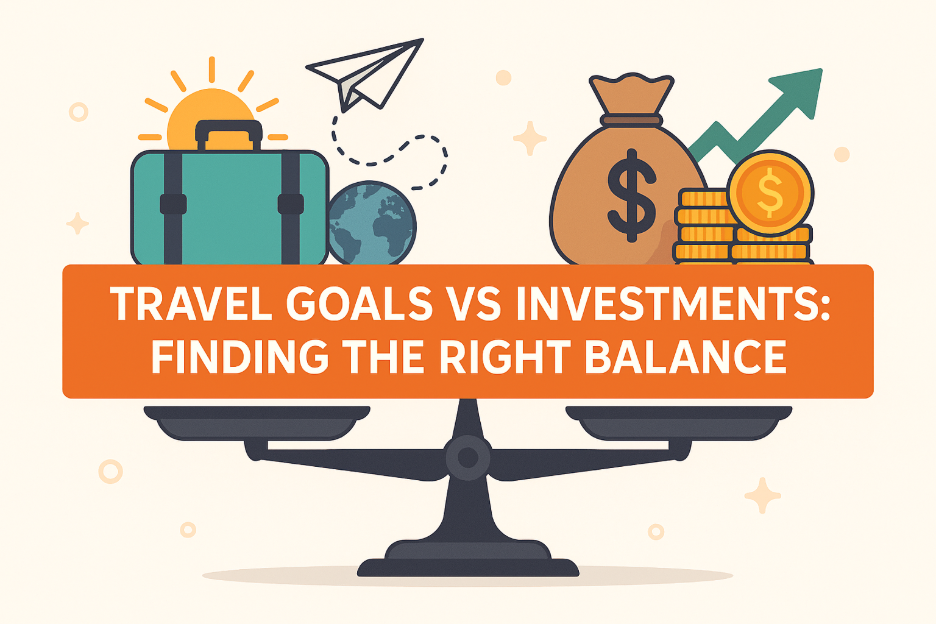
For today’s professionals, especially in fast growing economies like India, personal finance is no longer just about saving for retirement. It is about designing a life that balances experiences with financial security. Travel, once considered a luxury, has become a core life goal for many Indians. At the same time, rising inflation, market volatility, and longer life expectancies make disciplined investing more critical than ever.
The tension between spending on travel and allocating money toward investments is a real dilemma. Spend too much on experiences and long-term goals may suffer. Focus only on investments and you risk postponing life indefinitely. The right answer is not choosing one over the other, but creating a thoughtful balance.
This article explores how Indians can align travel aspirations with investment discipline, using current trends, financial principles, and practical frameworks.
Why Travel Has Become a Financial Priority in India
Travel spending by Indians has grown sharply over the last few years, both domestically and internationally. According to Reserve Bank of India data, outward remittances for international travel touched record levels in FY24, making travel the single largest contributor to foreign exchange outflows under the Liberalised Remittance Scheme. This reflects higher disposable incomes, global exposure, and a growing desire for experiences over possessions.
Surveys conducted in 2025 show that travel and personal experiences emerged as the top spending goal for nearly 38 percent of Indian respondents, ahead of investing and debt repayment. Social media, remote work flexibility, and post-pandemic mindset shifts have reinforced the idea that memories are worth paying for.
Travel today is not limited to leisure. It includes pilgrimages, family visits, milestone celebrations, and international exposure for children. For many households, travel has moved from discretionary spending to an emotional and lifestyle priority.
The Opportunity Cost of Travel Spending
While travel creates lasting memories, it also comes with a clear financial trade-off. Money spent on travel today is money that cannot be invested and compounded over time. This opportunity cost is often underestimated.
For example, ₹3 lakh spent on an international trip at age 30, if invested instead in an equity mutual fund earning 11 percent annually, could grow to over ₹45 lakh by age 60. The gap becomes even larger when such expenses are repeated frequently.
This does not mean travel should be avoided. It means travel decisions should be made consciously, with awareness of their long-term impact. Financial stress often arises not from travel itself, but from unplanned or debt-funded travel that disrupts savings and investment goals.
Why Investments Cannot Be Compromised
India’s financial landscape makes investing a necessity rather than a choice. Inflation in essentials like healthcare and education continues to outpace general inflation. Equity markets, despite short-term volatility, remain one of the most effective tools for long-term wealth creation.
Data from multiple surveys indicates that only a small percentage of Indians invest actively in growth assets like equities, while a larger share still relies on fixed deposits and gold. At the same time, life expectancy is increasing, which means retirement could last 25 to 30 years for many professionals.
Without consistent investing, even a high income may not translate into long-term financial security. This is why travel goals must be built around investments, not at their expense.
Reframing the Question: Experiences vs Assets
The debate is often framed incorrectly as travel versus investments. A more productive approach is to treat both as legitimate financial goals with different time horizons.
Investments are delayed gratification. Their value compounds quietly over time. Travel is immediate gratification. Its value is experiential and emotional.
Both serve different purposes. The mistake lies in mixing short-term desires with long-term money, such as dipping into retirement funds for vacations or using high-interest credit to travel.
When goals are separated and funded differently, balance becomes achievable.
A Goal-Based Framework for Balance
One of the most effective ways to balance travel and investing is goal-based financial planning. This approach assigns every rupee a purpose.
Step 1: Secure the Foundation
Before allocating money to travel, ensure the basics are in place:
- An emergency fund covering at least six months of expenses
- Adequate health and term insurance
- Regular investments toward retirement through EPF, NPS, or mutual funds
These should be non-negotiable. Travel budgets should be built only after this foundation is secure.
Step 2: Create a Dedicated Travel Fund
Instead of funding travel from surplus cash or investments, create a separate travel fund. This could be a recurring deposit or a low-risk debt mutual fund, depending on the travel timeline.
For example, if you plan one international trip every three years costing ₹4.5 lakh, setting aside ₹12,500 per month makes the goal manageable without financial stress.
This approach removes guilt from spending and prevents disruption to long-term investments.
Step 3: Match Investments to Time Horizon
Not all investments are meant for long-term compounding. Money needed within one to three years, such as for travel, should not be invested in volatile assets like equities.
Equity investments should be reserved for goals beyond five years, such as retirement or children’s education. Travel funds should prioritize capital protection and liquidity.
Lessons from Recent Travel Trends
Travel behavior in 2024 and 2025 shows increasing financial awareness among Indian travelers. Insurance coverage has become an essential part of travel planning, with policy issuance rising significantly year-on-year. This indicates a more risk-conscious mindset.
At the same time, travelers are budgeting more carefully, choosing value-driven experiences rather than unchecked luxury. This shift aligns well with a balanced financial philosophy, where enjoyment and prudence coexist.
Behavioral Traps to Avoid
Even with a plan, certain behavioral biases can derail balance.
Lifestyle inflation is one of the biggest threats. As income rises, travel upgrades from budget to premium, often without proportional increases in savings.
Social comparison also plays a role. Seeing peers travel frequently can trigger impulsive decisions that do not align with one’s financial reality.
Finally, emotional spending during stressful periods can lead to regret later. Recognizing these patterns is the first step to managing them.
The Middle Path: Conscious Spending
The goal is not extreme frugality or unchecked indulgence. It is conscious spending.
Ask three questions before committing to a travel expense:
- Does this fit within my dedicated travel budget?
- Does it affect my core investments or emergency reserves?
- Will I still feel comfortable about this expense a year from now?
If the answers are aligned, the decision is likely sound.
Conclusion: Designing a Life, Not Just a Portfolio
Travel and investments are not rivals. They are complementary parts of a well-designed life. Investments provide security, independence, and options. Travel provides perspective, joy, and memories that shape who we are.
In the Indian context, where incomes are rising but financial risks remain real, the right balance comes from planning, not sacrifice. By protecting long-term investments and consciously funding travel goals, professionals can enjoy the present without compromising the future.
The most successful financial plans are not the ones with the highest returns, but the ones people can stick to while still living fully.
Key Takeaways
- Treat travel as a planned financial goal, not an impulse expense
- Protect core investments and emergency funds at all costs
- Use goal-based planning to separate short-term experiences from long-term wealth creation
- Spend consciously, not emotionally