
Index Funds vs Actively Managed Funds: Which One Should You Pick?
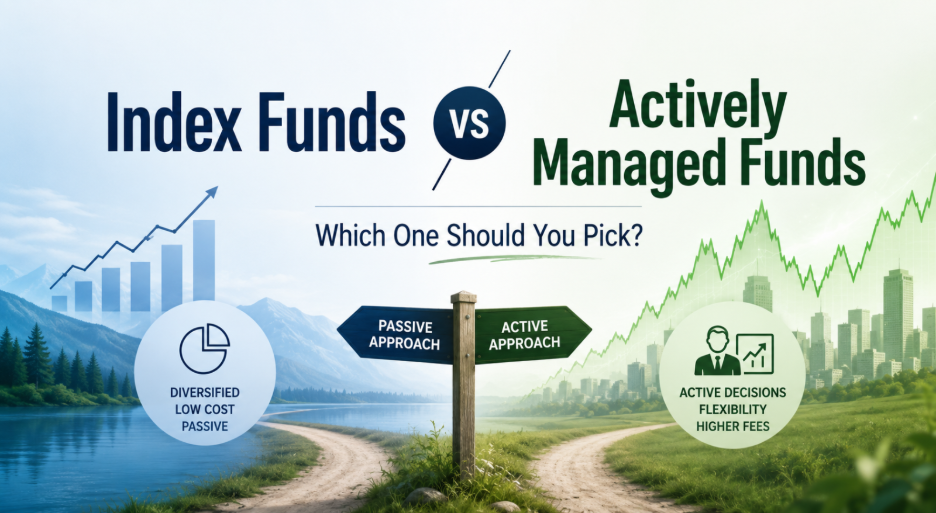
For many investors, mutual funds have become a preferred way to grow wealth, participate in equity markets, and build long term portfolios without the pressure of picking individual stocks. Yet one question continues to create confusion even among experienced investors: should you invest in index funds or should you choose actively managed mutual funds?
Both options aim to help you create wealth, but they work very differently. Understanding these differences can help you make smarter and more confident financial decisions.
What Exactly Are Index Funds?
Index funds are passively managed mutual funds that aim to replicate the performance of a specific market index. In India, the most well known benchmarks include the Nifty 50, Sensex, Nifty Next 50, and Nifty Bank. An index fund simply mirrors the index by holding the same stocks in the same proportion.
There is no active stock picking by a fund manager. The objective is to match the returns of the index, not beat it.
Why Investors Appreciate Index Funds
- Low cost
Index funds usually charge a much lower expense ratio than actively managed funds. Since the fund manager does not have to research and actively buy or sell stocks, administrative and management costs stay low. Over long periods, this cost difference significantly affects net returns.
- Transparency
You always know exactly what you are investing in because the fund tracks a known index. This clarity helps investors feel more comfortable with long term investing.
- Consistent performance relative to the benchmark
Many active funds struggle to beat the index consistently. With index funds, you get what the market gives you without worrying about a manager’s performance varying year to year.
- Suitable for long term wealth creation
Since markets tend to move upward over long horizons, staying invested through an index fund often rewards patient investors.
What Are Actively Managed Funds?
Actively managed funds work differently. Here, a professional fund manager makes decisions about which stocks to buy, sell, or hold in an effort to outperform the market. The goal is not to simply replicate an index but to deliver better returns by selecting high potential opportunities and avoiding weaker ones.
Why Many Investors Prefer Active Funds
- Possibility of outperformance
Skilled fund managers can identify opportunities before they become visible in the broader market. This ability can lead to returns higher than the market.
- Flexibility
Fund managers can adjust the portfolio during volatile periods, which may help reduce downside risks.
- Useful in less researched segments
In India, categories such as small cap and mid cap often offer scope for fund managers to add value because those segments are less efficient and less tracked. Research driven selection can sometimes lead to strong long term returns.
- Appeal to investors seeking guidance
Many individuals prefer relying on professional expertise rather than making sense of market movements on their own.
Where Index Funds Shine in the Indian Context
The Indian mutual fund landscape has evolved rapidly. Over the past few years, several large cap actively managed funds have struggled to consistently beat benchmarks like the Nifty 50. With regulation tightening and data becoming more widely available, markets have gradually become more efficient, making it harder to outperform the index through active management, especially in the large cap segment.
This has made low cost index funds a strong contender for investors who want simplicity and predictable benchmark linked performance.
In addition, the popularity of SIPs has made index funds even more attractive. Regular investing helps average out purchase costs and reduces the impact of short term volatility, which aligns well with how index funds operate.
Where Actively Managed Funds Still Have an Edge
While the case for index funds is strong, active funds continue to play a crucial role in many Indian portfolios.
In mid cap and small cap categories, skilled fund managers often uncover hidden opportunities that are not yet part of the index or are too early for passive strategies to capture. These segments involve higher volatility, but they also offer greater potential for long term capital appreciation. Active management can help navigate this complexity.
Actively managed hybrid funds also allow professionals to rebalance equity and debt exposure dynamically, which many investors find difficult to do on their own.
For investors who seek potential outperformance or want exposure to parts of the market that are not covered by mainstream indices, active funds remain relevant.
How Should You Decide?
Choosing between index funds and actively managed funds does not have to be an either or decision. Instead, it should depend on your goals, risk appetite, investment horizon, and comfort level.
Consider Index Funds If:
- You want a simple and transparent approach.
- You prefer low cost investing.
- You plan to invest for the long term without actively tracking markets.
- You are investing in large cap exposure where beating the benchmark consistently has become difficult.
Consider Actively Managed Funds If:
- You want exposure to small and mid cap categories.
- You believe in the potential of professional research and stock picking.
- You are comfortable with slightly higher costs for the chance of higher returns.
- You are building a diversified portfolio and want more than just market performance.
A Balanced Approach
For many Indian investors, a combination of both types of funds works best. Index funds can serve as the stable core of your portfolio. Active funds can complement this by adding potential alpha from mid cap, small cap, or sectoral opportunities.
This blended strategy gives you the benefits of low cost passive investing along with the potential gains that active management may deliver.
Final Thoughts
There is no universal answer for which is better. The right choice depends on what you expect from your investments. What matters most is clarity of purpose, disciplined investing, and a long term mindset.
Whether you choose index funds, actively managed funds, or both, consistency and patience remain your strongest tools in building wealth.