
How Neo-Banks Are Changing Personal Finance in India
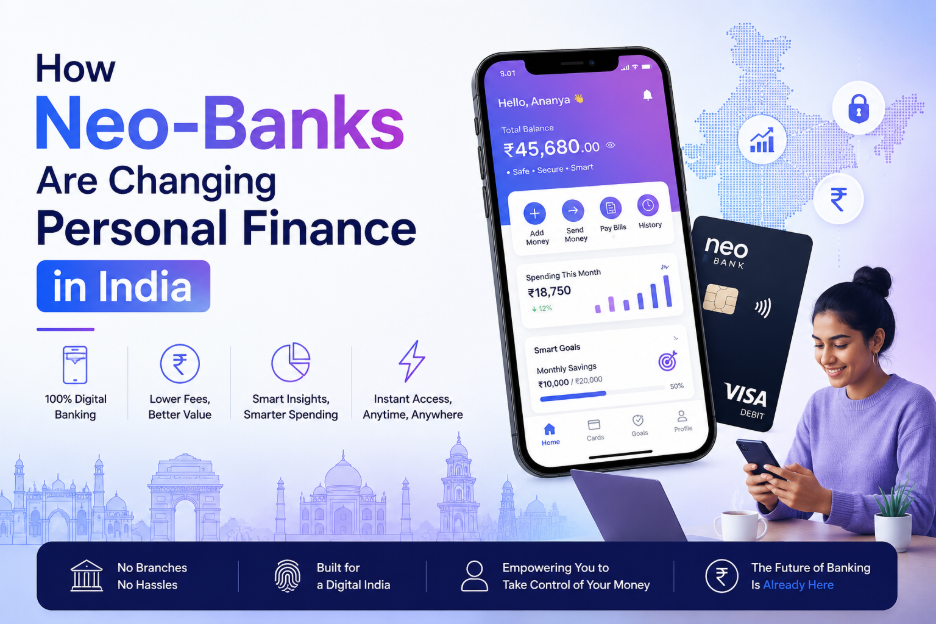
How Neo Banks Are Changing Personal Finance in India: A Complete Guide to Digital Banking in 2026
India’s banking sector has changed more in the last ten years than it did in the previous fifty. Digital payments took over, UPI became a part of daily life for hundreds of millions of people, and now a new kind of bank has entered the picture. Neo banks, also called digital banks or challenger banks, are online only financial platforms that offer savings accounts, payments, loans and investment tools without a single physical branch. They are not a passing trend. They are becoming a real part of how Indians save, spend and borrow money.
This guide looks at what neo banks are, why they are growing so quickly across India, and what this means for anyone trying to manage their money in a smarter way.
What Is a Neo Bank?
A neo bank is a financial technology company that delivers banking services entirely through a mobile app or website. Because neo banks in India are not licensed directly by the Reserve Bank of India, they work in partnership with RBI-regulated banks such as Federal Bank, ICICI Bank, YES Bank or DCB Bank. The neo bank builds the app, the interface and the customer experience, while the partner bank holds the deposits and handles the regulatory side of things.
Around the world, digital-only banks such as Revolut, N26, Chime and Monzo have already reshaped how people think about banking. In India, companies like Jupiter, Fi Money, Niyo, Freo, RazorpayX and Open have taken the same idea and built it around local needs, using Aadhaar based eKYC, UPI and the country’s fast growing smartphone user base to reach customers who might never walk into a branch.
Why Neo Banking Is Growing So Fast in India
There are a few clear reasons why neo banks are finding so many takers in India right now.
1. A Massive Digital Population
India now has one of the largest bases of internet and smartphone users in the world, and that number keeps climbing every year. Cheap data plans and affordable phones have put a bank branch in every pocket, and neo banks were built with exactly this kind of mobile first customer in mind.
2. No Queues, No Paperwork
Traditional banking still means forms, signatures and long waits at a branch counter. Neo banks skip all of that. Accounts can be opened in a few minutes using Aadhaar based KYC, and most day to day banking, from checking a balance to making a payment, happens inside an app at any hour of the day.
3. Smarter, More Personal Money Management
Most neo banking apps use data analytics and artificial intelligence to study spending habits and offer tips that actually fit the user’s own money patterns. Instead of a generic statement at the end of the month, people get real time alerts, spending breakdowns and budgeting tools built right into the account.
4. Lower Fees and Better Rates
Without the cost of running branches, neo banks can afford to charge less. Many offer zero balance savings accounts, low or no maintenance fees, and in some cases fixed deposit rates that are more competitive than what a traditional bank offers.
Core Features That Set Neo Banks Apart
- Instant account opening through Aadhaar based eKYC, often completed in under ten minutes
- Built-in budgeting and expense tracking that sorts spending into categories automatically
- UPI and payment integration for smooth transfers and bill payments
- Goal based savings that let users set a target and automate contributions toward it
- Clear, upfront fee structures with no hidden charges buried in the fine print
- Virtual and physical debit cards issued through the partner bank
- Short term credit and BNPL style options for users who qualify
How Neo Banks Are Reshaping Personal Finance in India
Wider Financial Inclusion
India still has a large population that has never had proper access to formal banking, especially in smaller towns and rural areas. Because a neo bank account can be opened from a phone with no branch visit required, this model has real potential to bring banking to people who were left out of the traditional system for years.
A Natural Fit for Young Consumers
Millennials and Gen Z want banking that works the way the rest of their digital life works: fast, simple and mostly automated. Neo banks answer that demand with features like instant credit lines, automatic expense categorisation and investment tools sitting inside one single app.
Better Financial Literacy Through Everyday Use
By showing users exactly where their money goes and pairing that with articles, tips and simple explainers inside the app, neo banks are quietly teaching a generation of Indians how to think about saving, budgeting and credit in a way that older banking statements never did.
Supporting a Cashless Economy
Every transaction made through a neo banking app is a transaction that did not need cash, a cheque or a trip to a branch. This lines up neatly with India’s own push toward Digital India and a more cashless way of handling money.
Challenges Neo Banks Still Need to Solve
No system is without its rough edges, and neo banking in India has a few of its own.
Regulatory dependence. Since neo banks cannot hold an RBI banking licence on their own, they are always working through a partner bank. This limits how independently they can price products or design new services.
Cybersecurity risk. A business that lives entirely online is a business that has to take data protection and fraud prevention seriously at all times. Phishing, malware and account takeover attempts are real threats that digital banks must guard against constantly.
Trust built over time. A good number of Indian customers, particularly older ones, still feel more comfortable walking into a branch and speaking to a person. Building that same level of trust in an app takes time and a track record of reliability.
Where Neo Banking in India Is Headed Next
The outlook for digital banking in India remains strong. Government programs like Digital India, rising smartphone ownership and growing comfort with online transactions are all pushing neo banks closer to the financial mainstream rather than keeping them as a niche product for early adopters.
Expect to see neo banks in India expand further into wealth management, insurance and investment products, along with more specialised platforms built for particular groups, from teenagers and NRIs to freelancers and small business owners. Business focused neo banks such as RazorpayX and Open are already showing how far this model can go once it moves beyond simple savings accounts into full financial operating systems for companies.
Final Thoughts
Neo banks are not simply a cheaper or faster version of a traditional bank account. They represent a genuine shift in how Indians are learning to interact with their own money, built around convenience, transparency and tools that were once available only through a financial advisor or a premium banking relationship.
If convenience, clear pricing and smarter money tools matter to you, it may be worth looking at what a neo bank can offer compared with your current account. For many Indians, especially those just starting their financial journey, this new generation of digital-first banking is turning out to be a genuinely useful step forward.