
The Role of Debt Funds in Your Portfolio: Safe or Risky?
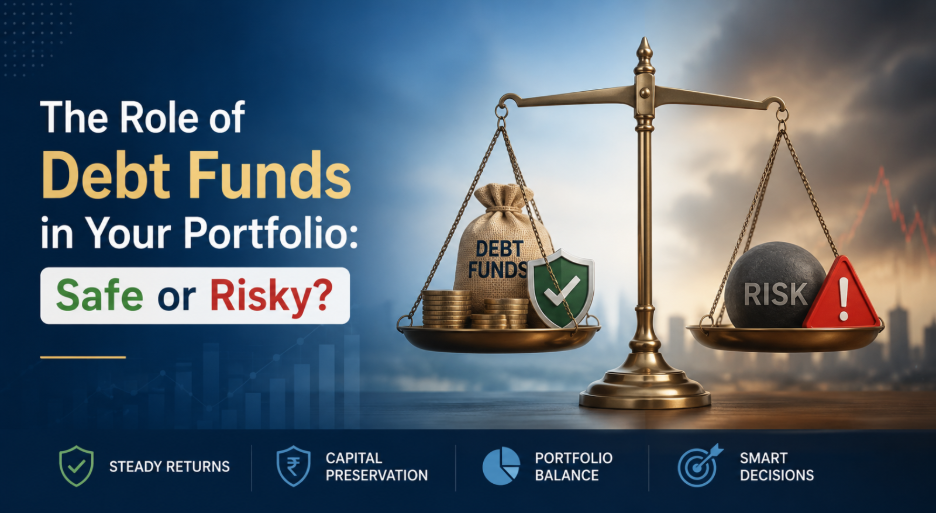
Investors often face the dilemma of balancing risk and return when constructing their portfolios. Equity funds are known for their potential to deliver high returns but also carry significant volatility. Debt funds, on the other hand, are frequently perceived as safer alternatives. Yet the question remains: are debt funds truly safe, or do they carry hidden risks that investors should be aware of? Understanding the role of debt funds in a portfolio requires a closer look at their structure, benefits, and potential pitfalls.
What Are Debt Funds?
Debt funds are mutual funds that primarily invest in fixed-income securities such as government bonds, corporate bonds, treasury bills, commercial paper, and other money market instruments. Unlike equity funds, which derive returns from the appreciation of stock prices, debt funds generate returns through interest income and modest capital gains from bond price movements.
The fundamental appeal of debt funds lies in their ability to provide relatively stable returns compared to equities. They are often recommended for conservative investors, retirees, or those seeking diversification in their portfolios.
Why Investors Choose Debt Funds
1. Lower Volatility
Debt funds are generally less volatile than equity funds because they invest in instruments with fixed interest payments. This makes them attractive to investors who prefer stability over aggressive growth.
2. Diversification
Adding debt funds to a portfolio helps balance risk. When equity markets are turbulent, debt funds can act as a cushion, reducing overall portfolio volatility.
3. Liquidity
Most debt funds offer high liquidity, allowing investors to redeem their investments quickly. This makes them suitable for short-term financial goals or emergency funds.
4. Tax Efficiency
In many jurisdictions, debt funds enjoy favorable tax treatment, especially when held for longer periods. For example, long-term capital gains on debt funds may be taxed at lower rates compared to interest earned on fixed deposits.
5. Professional Management
Debt funds are managed by professionals who actively monitor interest rate movements, credit quality, and market conditions. This expertise can help investors avoid risks they might not be able to manage on their own.
The Risks Associated with Debt Funds
Despite their reputation for safety, debt funds are not risk-free. Investors must understand the following risks before committing their money.
1. Interest Rate Risk
Bond prices and interest rates have an inverse relationship. When interest rates rise, bond prices fall, which can negatively impact the value of debt funds. Funds with longer maturity periods are more sensitive to interest rate changes.
2. Credit Risk
Debt funds that invest in corporate bonds face the risk of default. If a company fails to meet its debt obligations, the fund may suffer losses. Credit risk is particularly relevant in funds that chase higher yields by investing in lower-rated securities.
3. Liquidity Risk
Although debt funds are generally liquid, certain instruments within them may not be easy to sell in stressed market conditions. This can lead to delays or losses when investors attempt to redeem their investments.
4. Reinvestment Risk
When bonds mature or pay interest, fund managers must reinvest the proceeds. If prevailing interest rates are lower, reinvestment may occur at less favorable rates, reducing overall returns.
5. Market Risk
Debt funds are influenced by macroeconomic factors such as inflation, fiscal policies, and global financial trends. Sudden changes in these conditions can affect returns.
Types of Debt Funds and Their Risk Profiles
Debt funds come in various forms, each with a different risk-return balance. Understanding these categories helps investors choose funds aligned with their goals.
| Type of Debt Fund | Investment Focus | Risk Level | Suitable For |
| Liquid Funds | Very short-term instruments (up to 91 days) | Low | Emergency funds, short-term goals |
| Ultra Short Duration Funds | Instruments with maturity of 3–6 months | Low to moderate | Investors seeking slightly higher returns than liquid funds |
| Short-Term Funds | Bonds with maturity of 1–3 years | Moderate | Medium-term goals |
| Income Funds | Long-term bonds | Higher interest rate risk | Investors with long-term horizons |
| Credit Risk Funds | Lower-rated corporate bonds | High | Aggressive investors seeking higher yields |
| Gilt Funds | Government securities | Moderate (interest rate risk but no credit risk) | Risk-averse investors |
Safe or Risky: The Balanced Perspective
Debt funds are neither entirely safe nor inherently risky. Their safety depends on the type of debt fund chosen, the prevailing economic environment, and the investor’s risk tolerance. For example, liquid funds and gilt funds are relatively safe, while credit risk funds carry significant danger due to potential defaults.
Investors should avoid assuming that all debt funds are low-risk. The 2018 default crisis involving certain Indian non-banking financial companies highlighted how credit risk can severely impact debt fund investors. Similarly, sharp interest rate hikes by central banks can erode the value of long-duration funds.
How to Use Debt Funds in Your Portfolio
1. Match Investment Horizon
Choose debt funds that align with your financial goals. For short-term needs, liquid or ultra-short duration funds are appropriate. For medium-term goals, short-term funds may be better. Long-term investors can consider income or gilt funds.
2. Assess Risk Appetite
Conservative investors should stick to funds with minimal credit risk, such as gilt or liquid funds. Those willing to take higher risks for better returns may explore credit risk funds, but only with careful monitoring.
3. Diversify Within Debt Funds
Just as equity investors diversify across sectors, debt investors can diversify across fund categories. Holding a mix of liquid, short-term, and gilt funds can balance risk and return.
4. Monitor Interest Rate Trends
Debt fund performance is closely tied to interest rate movements. Investors should stay informed about central bank policies and economic indicators to anticipate potential impacts.
5. Evaluate Fund Manager Track Record
The expertise of fund managers plays a crucial role in navigating risks. Investors should review the track record of fund houses and managers before investing.
Debt Funds vs. Fixed Deposits
Many investors compare debt funds with fixed deposits (FDs). While FDs offer guaranteed returns and capital protection, they lack flexibility and tax efficiency. Debt funds, though riskier, can provide better post-tax returns and liquidity. The choice depends on whether an investor prioritizes safety or is willing to accept some risk for potentially higher gains.
Conclusion
Debt funds play a vital role in portfolio construction by offering stability, diversification, and tax efficiency. They are not entirely risk-free, but when chosen wisely, they can complement equity investments and reduce overall volatility. The key lies in understanding the specific type of debt fund, evaluating risks, and aligning investments with personal financial goals.
So, are debt funds safe or risky? The answer is that they can be both. For conservative investors, liquid and gilt funds provide relative safety. For those seeking higher yields, credit risk funds may be tempting but carry significant dangers. Ultimately, debt funds should be viewed as tools that, when used appropriately, enhance portfolio resilience and help investors achieve balanced growth.