
How Gold Investment Works: Digital Gold vs Physical Gold
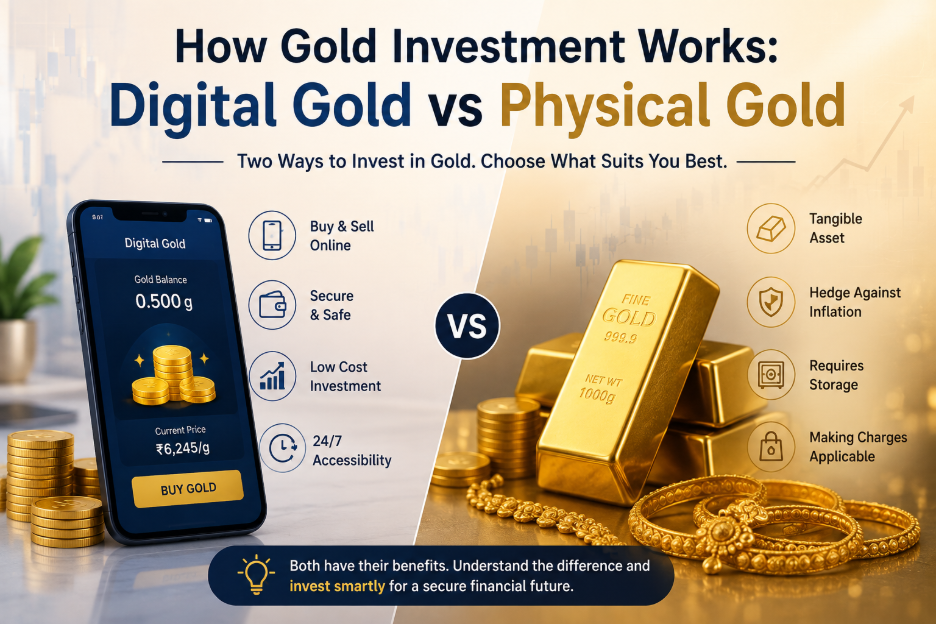
Gold has always been a symbol of wealth, security, and stability. For centuries, investors have relied on gold as a hedge against inflation and economic uncertainty. Today, technology has transformed how we invest in this precious metal. While physical gold remains a traditional favorite, digital gold is gaining traction among modern investors.
In this comprehensive guide, we’ll explore how gold investment works, compare digital gold vs physical gold, and provide actionable insights to help you make informed decisions.
Why Gold is a Timeless Investment
Gold is considered a safe-haven asset because:
- It retains value during inflationary periods.
- It diversifies your portfolio, reducing overall risk.
- It offers liquidity and global acceptance.
According to the World Gold Council, gold has delivered an average annual return of 10% over the last two decades, outperforming many traditional assets during market downturns. During crises like the 2008 financial meltdown and the COVID-19 pandemic, gold prices surged as investors sought stability.
Understanding Digital Gold
Digital gold is an innovative way to invest in gold without physically holding it. Through fintech platforms, you can buy gold online in small denominations, and the equivalent physical gold is stored in secure vaults.
How Digital Gold Works
- Purchase gold via apps or websites in grams or rupees.
- The platform stores equivalent gold in insured vaults.
- You can sell instantly or request physical delivery.
Popular platforms: Paytm, PhonePe, Groww, MMTC-PAMP.
Benefits of Digital Gold
- Start Small: Invest with as little as ₹1.
- Guaranteed Purity: 24K gold (99.9%).
- No Storage Hassles: Secure vaults eliminate theft risk.
- Instant Liquidity: Sell anytime at market price.
Understanding Physical Gold
Physical gold refers to tangible gold in the form of coins, bars, or jewelry. It offers cultural and emotional value, especially in countries like India.
How Physical Gold Works
- Buy from jewelers or banks.
- Store at home or in a locker.
- Resell at prevailing market rates (minus making charges for jewelry).
Benefits of Physical Gold
- Tangible Asset: You can hold and use it.
- No Platform Dependency: No reliance on digital systems.
- Cultural Significance: Preferred for weddings and gifts.
Digital Gold vs Physical Gold: A Detailed Comparison
| Feature | Digital Gold | Physical Gold |
| Convenience | Buy/sell online instantly | Requires visiting a store |
| Storage | Stored in secure vaults | Needs physical storage |
| Purity | Guaranteed 24K (99.9%) | Depends on seller |
| Liquidity | High – sell anytime | Moderate – resale may involve charges |
| Costs | Platform fees, GST | Making charges, storage cost |
Risks and Considerations
- Digital Gold:
- Not regulated by SEBI or RBI yet; choose trusted platforms.
- Limited holding period on some platforms (usually 5 years).
- Physical Gold:
- Risk of theft.
- Making charges reduce resale value.
- Requires secure storage.
Actionable Insights for Investors
- For short-term liquidity and convenience, choose digital gold.
- For long-term cultural or emotional value, opt for physical gold.
- Diversify: Allocate 5–10% of your portfolio to gold for stability.
- Use trusted platforms for digital gold and verify purity when buying physical gold.
Future of Gold Investment
With increasing digitization, digital gold is expected to grow rapidly, especially among millennials and Gen Z investors who prefer convenience and transparency. However, physical gold will continue to hold cultural significance in markets like India.
Conclusion
Gold remains a timeless investment, but the way we invest is evolving. Digital gold offers convenience and security, while physical gold retains cultural significance. The best approach? Combine both based on your goals.